Kingdom of God

Christ’s Inheritance of Israel and The Nations

From Israel to the Nations: The Mystery of God’s Kingdom Inheritance

Christ’s Inheritance and Israel’s Inheritance

In Psalm 2, we read: “Ask of Me, and I will give You The nations for Your inheritance, And the ends of the earth for Your possession” (Psalm 2:8). It should be clear that the Father is speaking to the Son, for it says in the preceding verse, “Yet I have set My King On My holy hill of Zion. I will declare the decree: The Lord has said to Me, You are My Son, Today I have begotten You” (Psalm 2:6-7, NKJV).[i] Jesus, the Son of God, has been set upon the hill of Zion, which represents God’s Kingdom, and will physically establish His Kingdom from Mount Zion, in Jerusalem. He will take the nations for His inheritance and the ends of the earth for His possession.

In the Old Testament, we find that God repeatedly affirms He has chosen Israel (also called Jacob) as His heritage or inheritance. In the following verses we read:

“I will also gather all nations, And bring them down to the Valley of Jehoshaphat; And I will enter into judgment with them there On account of My people, My heritage Israel, Whom they have scattered among the nations; They have also divided up My land” (Joel 3:2).

“Shepherd Your people with Your staff, The flock of Your heritage” (Micah 7:4).

“From following the ewes that had young He brought him, To shepherd Jacob His people, And Israel His inheritance” (Psalm 78:71).

“O God, the nations have come into Your inheritance; Your holy temple they have defiled; They have laid Jerusalem in heaps” (Psalm 79:1).

“For the Lord’s portion is His people; Jacob is the place of His inheritance” (Deuteronomy 32:9).

Israel is continually referred to in Scripture as God’s people, His heritage, His inheritance, and His flock. So, these verses raise some intriguing questions: if Jesus is to receive the nations as His inheritance according to Psalm 2, where does Israel fit into this picture? Has God substituted Israel for the nations, or somehow dissolved Israel’s identity altogether? And since we find that the church is Christ’s possession and His flock, how is the church part of Israel’s inheritance promises, and does Jesus have a new flock, called the church, that replaces Israel?

To answer these questions, we must distinguish between Israel as God’s chosen inheritance and the larger inheritance of the nations promised to Christ. Scripture brings these two inheritances together, not by abolishing Israel’s identity, but by showing how God gathers one redeemed people from Israel and the nations through faith in Christ.


Israel’s Calling and Inheritance

To understand how Israel relates to Christ’s inheritance of the nations, we must first examine Israel’s original calling. Deuteronomy 32 provides an important starting point because it places Israel and the nations within the same divine ordering of inheritance. This verse is also intriguing, because preceding it, the Lord says: “When the Most High divided their inheritance to the nations, When He separated the sons of Adam, He set the boundaries of the peoples According to the number of the children of Israel” (Deuteronomy 32:8). This verse establishes a distinct relationship between the number of the children of Israel and the nations, although we are not told exactly how this relationship unfolds. Only that there is a correlation.

Also, let me emphasize that the verse does not say that Jacob is His inheritance. It says it is the place of His inheritance. In Hebrew, the word for place is chevel (חֶבֶל), which means a rope, cord, or line. But it can also mean an assigned region, district, or inheritance, as in a measured lot of land. So, it is clear that God is not exclusively choosing the Jewish people as His inheritance; He has specifically chosen a measured portion of land as the appointed place to establish His Kingdom. We know this land to be what God promised to Abraham, Isaac and Jacob, and the city He chose for His earthly throne is Jerusalem.

The picture evolves when we understand that Jesus is returning to the Mount of Olives in Jerusalem. And from this allotted portion of land that was promised to the descendants of Abraham, Jesus is going to establish the boundaries of all the nations according to the number of the children of Israel. In other words, God has chosen Israel uniquely for Himself as an inheritance, and chosen them for a unique purpose, namely to establish His Kingdom from their allotted portion of land, over which He will gather all the nations to Himself as an eternal inheritance.

The translation here is from the Masoretic text. However, if we read the Septuagint LXX, it says, “When the Most High divided the nations, when he separated the sons of Adam, he set the bounds of the nations according to the number of the angels of God.” The Dead Sea Scrolls and Septuagint preserve an ancient textual tradition that reads “sons of God (b’nei Elohim),” rather than the traditional Hebrew Masoretic Text, “sons of Israel (b’nei Yisrael).” However, this distinction does not alter the text’s overarching meaning once we understand that the promises made to the children of Israel were that they would become sons of God.

Whether the textual tradition reads “sons of Israel” or “sons of God,” Deuteronomy 32 directs our attention toward a larger purpose: God’s choice of Israel is connected to His purpose for the nations. But this raises an even deeper question: Who ultimately qualifies as a son of God and, therefore, an heir of the promise? Let us explore this further.


The Promise Received by Faith

Israel’s inheritance cannot be understood merely in terms of land, ethnicity, or national calling. At the heart of the promise is something greater: the calling to become children of God. Jesus alludes to this when He cited Psalm 82 to the Jewish people as they were trying to kill Him, “Is it not written in your law, ‘I said, You are gods (Elohim)’” (John 10:34). The Psalm expounds on this, saying, “All of you are children of the Most High.” So now we have a better understanding of the fulfillment of the ultimate promise given to Israel. The Jewish people were called to be far more than God’s inheritance and land possession. They were destined to become His sons and daughters, children of the Most High God.

Jesus affirmed this, saying, “For in the resurrection they neither marry nor are given in marriage, but are like angels of God in heaven” (Matthew 22:30). Some scholars retain a distinction between the angelic realm and humanity. But here Jesus is pointing to a transcendent event, the resurrection, where the believer is transformed from this perishable and corruptible body to become like angels in heaven.[ii]

Scripture therefore presents a progression in the promise of sonship. Israel was first called God’s son corporately: “Israel is My son, My firstborn.”[iii] Yet the fullness of this sonship is realized individually in those who receive Christ, for John says that those who believe in His name are given “the right to become children of God.”[iv] This promise of adoption ultimately looks forward to the resurrection, when the children of God will receive their glorified inheritance. Jesus describes this transformed state by saying that in the resurrection they “are like angels of God in heaven.”[v] Thus, being called God’s son, becoming His children through faith, and being transformed in the resurrection are related aspects of the same unfolding promise: what was declared concerning Israel finds its ultimate realization in those who belong to Christ and are raised to eternal life.

But Scripture places an important condition upon this promised sonship. John tells us: “But as many as received Him, to them He gave the right to become children of God, to those who believe in His name: who were born, not of blood, nor of the will of the flesh, nor of the will of man, but of God” (John 1:12-13). And Paul expounds on this, saying, “Those who are the children of the flesh, these are not the children of God; but the children of the promise are counted as the seed” (Romans 9:8). In other words, being born into Israel does not guarantee that one will be a recipient of the promise. It requires faith in Christ as the seed of the promise. He is the anointed one of Israel, the Messiah. Those who reject Him reject their inheritance in Him.

God in the Old Testament took Israel as His special possession and inheritance, and He promised that they would become sons of God, even calling them His sons long before the appointed time of their inheritance. God is outside of time. We read in Exodus, “Thus says the Lord: Israel is My son, My firstborn” (Exodus 4:22). However, receiving the promise was conditional. Conditional at first through faithful obedience to the Law of Moses, and when Christ came, through faithful obedience to follow the Son of God. Faith was always the key to God’s Kingdom, “Without faith it is impossible to please Him, for he who comes to God must believe that He is, and that He is a rewarder of those who diligently seek Him” (Hebrews 11:6).

The children of Israel were promised to become the sons of God, and this is the most tragic rejection of their inheritance. It is more than not entering God’s Kingdom; they are losing their inheritance as God’s sons. John specifically says, “As many as received Him,” implying that any person, even those of the Gentiles, who receives Christ, is promised the resurrection and the destiny to become a son or daughter of God Most High. Paul says, “For as many as are led by the Spirit of God, these are sons of God” (Romans 8:14).

The inheritance, therefore, is received by faith rather than natural descent alone. Israel was called as God’s son, but the promised sonship reaches its fulfillment in those who receive Christ. It creates the question Paul confronts directly: What happens when some of Israel rejects the promise while Gentiles receive it by faith?


Israel’s Stumbling and the Calling of the Nations

If the promise is received by faith, Israel’s unbelief creates a difficult but unavoidable question: does the rejection of Messiah by some Israelites nullify Israel’s calling, or does God accomplish His purposes another way?

Paraphrasing from Hosea, and speaking to the Gentiles, Paul says, “And it shall come to pass in the place where it was said to them, ‘You are not My people,’ There they shall be called sons of the living God” (Romans 9:26). In other words, the promise for Israel was now going to include the Gentiles, grafting them in place of dead branches that God has cut away from His cultivated olive Tree. Jesus Himself said this to the Jewish leaders who rejected Him, “The kingdom of God will be taken from you and given to a nation bearing the fruits of it” (Matthew 21:43). To be clear, I am not espousing replacement theology. But I am highlighting what the Scriptures warn: “Therefore consider the goodness and severity of God: on those who fell, severity; but toward you, goodness, if you continue in His goodness. Otherwise you also will be cut off” (Romans 11:22).

For those who reject God’s promise, He will cut them out of His cultivated olive tree, and graft in those called of the Gentiles to become His sons and daughters. Again, this is not a replacement of Israel; it is a replacement of dead branches, those that died without faith, and a grafting in of faithful wild (Gentile) branches to become one flock and one people in Christ. We have answered the first question: Israel is still the place of God’s inheritance, and He has opened the door of salvation to the Gentiles, those who by faith have received Christ. They are now also God’s inheritance. But this creates a new tension: do these grafted Gentile branches now become Israelites, or is God merely redeeming the nations through Israel?


One Covenant, One People, One Olive Tree

We have established that Gentile believers become partakers of Israel’s covenant promises without replacing Israel. But what exactly does that make them? Do Gentiles become Israelites, do Jews and Gentiles constitute two covenant peoples, or does Scripture present another category altogether?

This question remains at the center of the controversy surrounding what is called Supersessionism (Replacement Theology). We do not find two covenant peoples of God in Scripture; we find one covenant people, namely Israel, and after Jesus came, we find the church. The New Covenant was made exclusively with the House of Israel and the House of Judah, and God later opened it to the Gentiles.[vi]

Some who espouse Covenant Theology argue that Israel’s covenantal promises are fulfilled in the church, also called Fulfillment Theology. But this theology has flaws, because God repeatedly says in His word that He will regather and restore the scattered descendants of Jacob. Instead, what I am presenting here is a middle ground between classical dispensationalism and covenant theology. Clearly, the church is not being scattered into exile with a promise of regathering. Therefore, the church cannot be the fulfillment of these promises, given that these promises were made exclusively to the natural descendants of Abraham. Also, Paul refers to Himself as an Israelite, so it is clear that he retained His natural identity.

So, if there is only one covenant people in the Old Testament called Israel, then some would presume that Gentiles brought into Israel’s covenant promises become Israelites. But this would require the Gentiles to obey the Abrahamic Covenant and receive the sign in the flesh—circumcision. However, this issue was clearly resolved by the Council of Jerusalem. Gentile believers do not become Israelites, nor are they required to follow the Law of Moses regarding circumcision and dietary laws. The Gentiles, however, do become partakers of Israel’s covenant promises. But now we have a new tension: being a partaker in Israel’s promises leads to what appears to be a differentiation within the body of Christ, a present-day argument in many churches and Messianic congregations. Yet Paul says, “We, being many, are one body in Christ, and individually members of one another” (Romans 12:5). One body implies no division.

We therefore encounter two boundaries that must both be maintained: Gentiles do not need to become Jews in order to inherit Israel’s promises, and Jews do not need to give up their ethnic identity and become Gentile Christians. And yet, Jewish and Gentile believers do not constitute two separate bodies before God. The answer must preserve both distinction and unity. Jesus gives us the language for doing precisely that: one Shepherd and one flock.

One Shepherd and One Flock

Jesus Himself provides the framework for resolving the tension between Israel’s particular calling and God’s purpose for the nations. His mission begins with Israel, but His flock ultimately encompasses far more than Israel alone.

Still, some scholars argue for two covenant people groups, Jews and Gentiles, but this view has theological flaws. Jesus is the mediator of the New Covenant, and there is only “one” covenant for Jew and Gentile. More significantly, Jesus said, “I was not sent except to the lost sheep of the house of Israel” (Matthew 15:24). This verse might lead some to believe that Jesus did not also come for the Gentiles, and yet, John declares, “Behold! The Lamb of God who takes away the sin of the world!” (John 1:29).

There is only one way to resolve this seeming paradox. God must have other nations that were to become His inheritance. Jesus said, “Other sheep I have which are not of this fold; them also I must bring, and they will hear My voice; and there will be one flock and one shepherd” (John 10:16). The question is whether Jesus receives these nations through Israel or apart from her. For this reason, the Lord says in Deuteronomy, “Jacob is the place of His inheritance” (Deuteronomy 32:9), emphasis on the word “place.” In other words, Christ will receive His inheritance of the nations through the allotment apportioned to Israel, not apart from her.

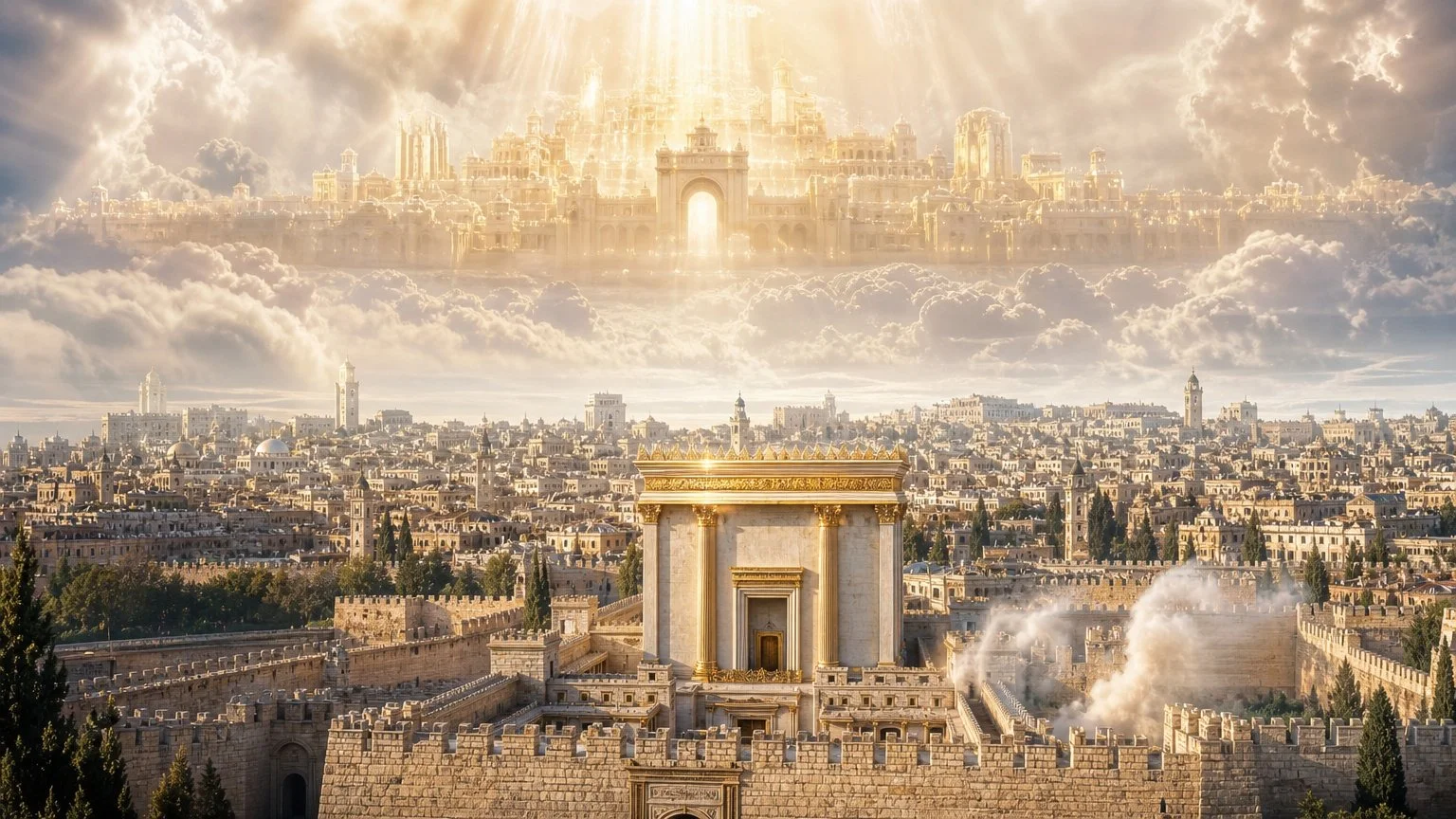
We are given a beautiful picture of God’s Kingdom when John sees the holy city, the New Jerusalem, coming down from God out of heaven, prepared as a bride adorned for her husband. The city has twelve gates named after the twelve tribes of Israel, and its foundation is the twelve apostles of the Lamb. And it says, “The nations of those who are saved shall walk in its light, and the kings of the earth bring their glory and honor into it. Its gates shall not be shut at all by day (there shall be no night there). And they shall bring the glory and the honor of the nations into it” (Revelation 21:24-26). The nations and their kings enter through gates named after the twelve tribes of Israel. Is this not a fulfillment of Ezekiel’s prophetic words, where he says, “It shall be that in whatever tribe the stranger dwells, there you shall give him his inheritance,” says the Lord God” (Ezekiel 47:23).

Israel was given a promise, fulfilled in the Messiah, that they would become sons of God, but God has also called His elect from amongst the nations, that they also may become sons of God. Hence, Paul says, “Even us whom He called, not of the Jews only, but also of the Gentiles” (Romans 9:24). And yet, one body and one flock comprised of two groups, Jews and Gentiles, does not mean two separate covenants, because there is only one King, Jesus, Yeshua. He is the mediator of the one New Covenant. However, one body and one flock does not mean we do not retain our unique qualities. We do. In Revelation, we read, “You are worthy to take the scroll, And to open its seals; For You were slain, And have redeemed us to God by Your blood Out of every tribe and tongue and people and nation, And have made us kings and priests to our God; And we shall reign on the earth” (Revelation 5:9-10).

This clarity should remove the tension between Jew and Gentile. We are one in Christ, equal before God, but we do not need to be the same. And Christ’s inheritance is more than Israel, because it is through Israel’s allotted portion that the nations are grafted into His Kingdom. Hence, Paul says to the Gentiles, “You, being a wild olive tree, were grafted in among them, and with them became a partaker of the root and fatness of the olive tree” (Romans 11:17). Amongst them implies amongst the natural branches of Israel.

The nations are joined to Israel to become one global family of God’s children of every tongue and tribe. Christ’s inheritance is every nation to the ends of the earth. Israel retains a unique identity within His Kingdom, but the nations are joined to Israel, fulfilling the promise to Abraham that he would become the father of many nations. And his descendants would be as numerous as the stars in heaven and the sands of the sea.[vii] But if Gentile believers neither replace Israel nor become ethnic Israelites, what precisely is their relationship to Israel and her inheritance? Paul calls the answer a mystery.


The Mystery Revealed

We can now state the mystery more precisely. God’s purpose was not merely to preserve Israel on one side and save Gentiles on the other, but to bring believing Jews and Gentiles together in Christ as joint heirs of His Kingdom—without erasing the distinctions from which they were called.

In Scripture, the church is not called Israel. She is called the ecclesia, which translates as “the assembly.” The church is the assembly of all of God’s children redeemed by the blood of the Lamb from every nation. Israel was promised to become sons of God, and with this, the nations were promised as an inheritance to Israel. It says, ”For you shall expand to the right and to the left, And your descendants will inherit the nations, And make the desolate cities inhabited” (Isaiah 54:3). The promise is that all the sons of God will inherit the nations through Israel. In this regard, the church is both the called-out ones, the elect of God, but also the spiritual descendants of Abraham that receive the promise of adoption and the inheritance of the nations in Christ.[viii] We are those whom the Lord has elected to rule and reign with Jesus over the nations.

And this is one of the great mysteries that Paul reveals, that the Gentiles who were not part of God’s covenant were brought near to enter into His covenant in the place of those who were cut off due to their unbelief. Hence Paul says, “Through their fall, to provoke them to jealousy, salvation has come to the Gentiles” (Romans 11:11). Paul is not saying that the church replaces Israel. He is saying that due to their unbelief, God has severed dead branches from His cultivated Olive tree, and in their place He has given over His inheritance to the Gentiles who have received Christ by their simple faith. As the Lord declared: “I was sought by those who did not ask for Me; I was found by those who did not seek Me. I said, ‘Here I am, here I am, To a nation that was not called by My name. I have stretched out My hands all day long to a rebellious people, Who walk in a way that is not good, According to their own thought” (Isaiah 65:1-2). Paul paraphrases Isaiah 44, saying, “What then? Israel has not obtained what it seeks; but the elect have obtained it, and the rest were blinded… But through their fall, to provoke them to jealousy, salvation has come to the Gentiles” (Romans 11:7, 11).

Another mystery is how the Gentiles become part of Israel, spiritually, but do not lose their identity of the nations where they were called from. The analogy of the cultivated Olive tree that Paul describes in Romans 11 is both a picture of Israel, represented by a green Olive tree in Scripture, and of God’s Kingdom, which the disciples understood as belonging to Israel.[ix] As they asked Jesus, “Lord, will You at this time restore the kingdom to Israel?” (Acts 1:6).

The mystery, then, is not that Gentiles become ethnic Israel, nor that the church replaces Israel. Rather, Gentiles who were once outside the covenant are brought near through Christ and made fellow heirs with Israel of the promises, while God remains faithful to His purposes concerning Israel.[x]


Israel’s Future Hope

One final detail: most of Israel today is still largely rejecting their inheritance in Christ. However, none of this means that God has finished with natural Israel. If the inclusion of the Gentiles does not constitute Israel’s replacement, then Scripture should also testify to a future hope for the descendants of Jacob, and it does. God will fulfill His promise to save a remnant at the end of this age. God issued a certificate of divorce to Israel’s ten northern tribes, later scattering them into captivity. And yet, the Lord says:

“Where is the certificate of your mother’s divorce, Whom I have put away? Or which of My creditors is it to whom I have sold you? For your iniquities you have sold yourselves, And for your transgressions your mother has been put away” (Isaiah 50:1); “Yet the number of the children of Israel Shall be as the sand of the sea, Which cannot be measured or numbered. And it shall come to pass In the place where it was said to them, ‘You are not My people,’ There it shall be said to them, ‘You are sons of the living God’” (Hosea 1:10).

God’s promises to Israel are unbreakable and irrevocable. Still, the only assurance of becoming a child of God and entering His Kingdom is through His Son, Jesus (Yeshua). There is no other way to enter. Paul warns that many of his brethren are perishing without Christ, and implores the Gentiles to share the Gospel and provoke as many to jealousy as possible.

We can therefore return to the questions with which we began. Christ’s inheritance is the nations, including the nation of Israel; Israel remains uniquely chosen within God’s redemptive purposes; and believing Gentiles are brought into the blessings of Israel’s covenant promises through Christ without becoming ethnic Israelites or displacing Israel. Jew and Gentile remain distinguishable, yet in Christ they belong to one body, one flock, and one Kingdom under one Shepherd. Let us remain strongly planted in our faith, Jew and Gentile, the elect of God called together as One New Man in Christ, for we know the great inheritance that we have in the Lord, to become His sons and daughters and to enter His Kingdom forever.


[i] All Scripture quotations are taken from the New King James Bible (NKJV) unless otherwise noted, Thomas Nelson Inc., 1982.
[ii] Job 1:6. Genesis 6:2, 4. Revelation 19:10.
[iii] Exodus 4:22.
[iv] John 1:12.
[v] Matthew 22:30.
[vi] Jeremiah 31:31.
[vii] Genesis 15:5, 17:4-5, 22:17, 26:4.
[viii] Romans 4:16.
[ix] Jeremiah 11:16.
[x] Ephesians 2:11–22, 3:4–6.


Israel, America, and The Kingdoms of This World

Exploring America's Christian Foundations, God's Purposes for the Nations, and the Hope of Christ's Kingdom

America’s Christian Foundations

Before landing at Plymouth in 1620, the Pilgrims signed what is known as the Mayflower Compact, whereby they acknowledged God as the reason for their voyage.[i] They stated that they were undertaking the journey for the Glory of God and the Advancement of the Christian Faith, and covenanted together to establish a civil government under God.[ii] The Puritans believed they were entering into a covenant with God, like that of ancient Israel.

In 1630, John Winthrop, the first governor of the Massachusetts Bay Colony and a chief figure among the Puritan founders of New England, preached “A Model of Christian Charity,” where he made this famous statement: “We shall be as a city upon a hill.” Winthrop warned that if they remained faithful, God would bless them, and if they abandoned Him, they would become a warning to the nations.[iii] This statement became one of the strongest theological foundations for the idea that America had a special calling and a divine purpose.

Most, if not all of the Founders of this nation were familiar with the Bible, believing it influenced the moral culture in which they lived. While there was never a single official national covenant with God like the biblical covenants God made with Israel, there were several significant public covenants, dedications, and calls to prayer throughout American history. The early colonial governments frequently proclaimed days of fasting, repentance, thanksgiving, and prayer. Several explicitly described themselves as depending upon God’s covenant mercy, confessing national sins and asking God for mercy, protection, and blessing.

During the Revolutionary War, the Continental Congress proclaimed multiple national days of prayer, fasting, humiliation, and thanksgiving. In 1775 and subsequent years, these leaders, several of whom were ordained ministers, called on Americans to confess sins, seek forgiveness, ask God’s protection, and pray for national success.[iv] After becoming the first president, George Washington, in his First Inaugural Address in 1789, acknowledged God’s providence over this nation, stating: “No people can be bound to acknowledge and adore the Invisible Hand...” Washington called the nation to thank God, obey His will, repent of national sins, and ask for His blessing.[v] It was one of the earliest presidential calls for national devotion.

Although not a covenant, the Declaration of Independence repeatedly references God as creator and the supreme judge of the world. The founders appealed to God’s Divine Providence and the source of all human rights. Believing in the Biblical truth that all humans are created in His image, the Declaration explicitly states that “all men are created equal.” Many early state constitutions acknowledged almighty God, Christian morality, and divine providence. Several required public officials to affirm belief in God, specifically belief in Christianity, although these provisions are no longer enforceable under later constitutional law.

While there is only one Biblical covenant nation with God, the Nation of Israel, it is evident that the men and women who first established this great nation were predominantly God-fearing Christians.[vi] And the residual blessings are evident. The United States, despite its internal and external political and economic struggles over the past 250 years, has been a remarkably successful instrument, both spiritually and materially, used by God to advance His Kingdom.

By virtually every modern measure, the United States has been the world’s largest sender and financial supporter of Christian missionaries, particularly from the 19th century through the present. Research by mission organizations such as the Center for the Study of Global Christianity consistently places the United States first in church planting, in the sending out and financial support of the largest number of long-term missionaries, funding for Bible translations, and and financially supporting humanitarian ministries, including hospitals and medical missions, schools and universities, orphanages, disaster relief, seminaries, and leadership training.[vii]

While America’s Christian heritage helps explain much of its remarkable influence throughout history, it also raises an important theological question. Does Scripture recognize any covenant relationship between God and modern nations such as the United States, or is that privilege reserved exclusively for Israel? To answer that question, we must first understand what the Bible actually says about God’s covenants.


Israel’s Unique Covenant

Before examining America’s place in God’s purposes, we must establish an essential biblical distinction. Scripture consistently presents Israel as God’s unique covenant nation. At the same time, it also reveals that God’s redemptive plan has always extended beyond Israel to embrace the nations through the reign of the Messiah.

Scripturally, Israel is the only nation mentioned that has a covenant relationship with God, and not one, but multiple covenants that God made, extending from Abraham to Moses, Aaron, and King David. However, just because we cannot find any direct Scriptural language establishing God’s covenant with the United States, we should not assume that God has no promises for this nation, even covenant promises that are linked to Israel. It should give us hope that God indeed has an eternal destiny for this nation and many others. Yes, God explicitly made a covenant promise with Abraham that He would give his descendants all the land from the Western Sea (the Mediterranean) to the Euphrates River in modern-day Iraq. And from the great river of Egypt (The Nile River) all the way to the mountains of Lebanon.[viii] However, for those who believe that the church is the “new” Israel, this leaves Christ’s inheritance of all things in heaven and on earth short of the promises in Scripture. As it says, “Ask of Me, and I will give You The nations for Your inheritance, And the ends of the earth for Your possession” (Psalm 2:8, NKJV).[ix]

While Jesus is called the King of the Jews, He is also the King of kings and Lord of lords. He is the God of all creation, and “All things were made through Him, and without Him nothing was made that was made” (John 1:3). Jesus said, “All authority has been given to Me in heaven and on earth” (Matthew 28:18). It should be clear that the church is not a “new” Israel, nor is the United States a replacement for God’s covenant nation.

Still, we are one of the many nations, including Israel, that Christ will inherit and take for His possession. In fact, there will be no place in heaven or on earth that He will not possess. Any person not found in the Lamb’s Book of Life will be cast out of His Kingdom, and any nation that He cuts off will be destroyed and their memory erased forever. In this sense, our covenant promises, as a nation, are connected to Christ through Israel. Paul says, “You, being a wild olive tree, were grafted in among them, and with them became a partaker of the root and fatness of the olive tree” (Romans 11:17).

Many see these verses from a personal salvation viewpoint, as in, “becoming part of Israel.” In a sense it is true, spiritually. However, materially, it is more accurate to see the Gentiles as various nations and people groups who will be joined with Israel into what Paul calls the “Commonwealth of Israel.”[x] Not to lose our individual identity, but to gain our true identities as inheritors of the whole earth, in Christ, and to fullfill the promise that God made to  Abraham, that he would become the father of many nations. I will expand more on this in a moment.

If this understanding is correct, then the next question is: How does God govern and judge the nations that ultimately belong to Christ? Thankfully, Scripture provides a consistent pattern through God’s dealings with Israel and its surrounding kingdoms.


How God Judges and Blesses the Nations

One of the clearest principles found throughout Scripture is that God’s dealings with Israel often reveal His dealings with all nations. While Israel occupies a unique covenant position, the moral principles by which God blesses, disciplines, and judges nations remain remarkably consistent throughout biblical history.

God’s dealings with the United States, and all nations for that matter, are consistently revealed in His dealings with Israel. In actuality, God’s judgments for Israel are double those delivered to every other nation, as it says, “Speak comfort to Jerusalem, and cry out to her, That her warfare is ended, That her iniquity is pardoned; For she has received from the Lord’s hand Double for all her sins” (Isaiah 40:2). And yet, God has also promised Israel a double portion of blessings, as He says, “Instead of your shame you shall have double honor, And instead of confusion they shall rejoice in their portion. Therefore in their land they shall possess double; Everlasting joy shall be theirs” (Isaiah 61:7).

Concerning God’s blessings for Israel and the nations, we read, “Blessed is the nation whose God is the Lord, The people He has chosen as His own inheritance” (Psalm 33:12). While this verse was spoken over Israel, I read it broadly, meaning, I believe it applies to every nation. More significantly, concerning God’s judgments, we read:

“The instant I speak concerning a nation and concerning a kingdom, to pluck up, to pull down, and to destroy it, if that nation against whom I have spoken turns from its evil, I will relent of the disaster that I thought to bring upon it. And the instant I speak concerning a nation and concerning a kingdom, to build and to plant it, if it does evil in My sight so that it does not obey My voice, then I will relent concerning the good with which I said I would benefit it” (Jeremiah 18:7-10).

Again, the language is broadly applied, clearly inferring that God treats all nations the same. As it says, “God is no respecter of persons,” meaning God does not show favoritism or partiality.[xi] Everyone has equal access to His grace and is judged by the same righteous standards.

God’s judgments are slow and progressively intensify, signifying He is patient and long-suffering. His judgments are to get our attention. Here, in Jeremiah, we find that rain from heaven, frequently associated in Scripture with blessing, is withheld, likely in measure: “Take heed to yourselves, lest your heart be deceived, and you turn aside and serve other gods and worship them, lest the Lord’s anger be aroused against you, and He shut up the heavens so that there be no rain, and the land yield no produce, and you perish quickly from the good land which the Lord is giving you” (Deuteronomy 11:16-17). And if you believe these judgments are only for Israel, take note from Zechariah: “It shall be that whichever of the families of the earth do not come up to Jerusalem to worship the King, the Lord of hosts, on them there will be no rain” (Zechariah 14:17).

On the opposite side, rain is also seen in Scripture as divine judgment in the form of flooding and hailstones: “Therefore thus says the Lord God: “I will cause a stormy wind to break forth in My fury; and there shall be a flooding rain in My anger, and great hailstones in fury to consume it” (Ezekiel 13:13); And I will bring him to judgment with pestilence and bloodshed; I will rain down on him, on his troops, and on the many peoples who are with him, flooding rain, great hailstones, fire, and brimstone” (Ezekiel 38:22). These two chapters in Ezekiel resonate with similar language. First, God’s judgment against Israel in chapter 13 for their idolatry and lying prophets, and then judgment against the Gentiles in chapter 38 for coming in battle against Israel.

God has historically used the nations to judge Israel, and in return, God has judged those nations that came against His covenant people. Even when God puts a hook in their mouth to fight Israel, God still holds them accountable for their wicked actions. We read, “The Lord will bring a nation against you from afar, from the end of the earth, as swift as the eagle flies, a nation whose language you will not understand, a nation of fierce countenance, which does not respect the elderly nor show favor to the young” (Deuteronomy 28:49-50). Concerning the nations, we read, “I will also gather all nations, And bring them down to the Valley of Jehoshaphat; And I will enter into judgment with them there On account of My people, My heritage Israel, Whom they have scattered among the nations; They have also divided up My land” (Joel 3:2).

Recognizing this pattern helps us to understand the nature of Christ’s judgments against the nations found in Matthew 25: “All the nations will be gathered before Him, and He will separate them one from another, as a shepherd divides his sheep from the goats” (Matthew 25:32). God’s sovereignty over all the nations is perfect, His knowledge is complete, and His judgments are just. Human choices matter, moral responsibility remains real, and God’s eternal purposes for every nation continue to unfold according to His wisdom and grace. God’s judgments, however, are never merely punitive. They ultimately serve His larger redemptive purposes, preparing the nations for their future inheritance under the reign of Christ. I pray the Lord finds the United States to be a sheep nation.


The Inheritance of the nations

God’s dealings with the nations are not limited to judgment alone. Running alongside His warnings is an equally remarkable promise: through Abraham, God intended to create a Kingdom comprised of many nations under the rule of His Son. Understanding this promise is essential to understanding our own inheritance in Christ.

God made a covenant with Abraham concerning Israel, yet He also promised that Abraham would be the father of many nations. So, in this sense, God’s covenant of faith is offered and extended to the nations. It is for this reason Paul says, “And the Scripture, foreseeing that God would justify the Gentiles by faith, preached the gospel to Abraham beforehand, saying, In you all the nations shall be blessed” (Galatians 3:8). In Romans, Paul brings this understanding full-circle, saying, “Therefore it is of faith that it might be according to grace, so that the promise might be sure to all the seed, not only to those who are of the law, but also to those who are of the faith of Abraham, who is the father of us all” (Romans 4:16).

Many read these verses as God’s promise of personal salvation, even to the Gentiles. But notice, again, that God promised to make Abraham the father of “many” nations. The implication here is clear; God is not merely promising personal salvation. He is promising salvation to a Kingdom, and this Kingdom is comprised of many kingdoms. Again, Jesus is the King of kings, and Lord of lords. God’s Kingdom is a Kingdom of kingdoms, and our salvation is into this Kingdom, a heavenly realm and an earthly dominion comprised of many nations over which we will rule and reign with Christ. As it says, “Blessed and holy is he who has part in the first resurrection. Over such the second death has no power, but they shall be priests of God and of Christ, and shall reign with Him a thousand years” (Revelation 20:6).

These verses also bring clarity to the Father’s promise in Psalm 2: “Ask of Me, and I will give You The nations for Your inheritance, And the ends of the earth for Your possession” (Psalm 2:8). And it helps us to understand the promise made in Deuteronomy (Masoretic text), where it says, “When the Most High divided their inheritance to the nations, When He separated the sons of Adam, He set the boundaries of the peoples According to the number of the children of Israel” (Deuteronomy 32:8). For reference, the Septuagint says, “According to the number of the children of God.” Either way, the implication is clear. God’s Kingdom is reserved for His children.

God has a covenant promise with each one of us, born again of His Spirit, and that promise includes an earthly kingdom. It is, in a sense, God’s covenant with the nations, not just Israel. It is why God declared, “Ho! Everyone who thirsts, Come to the water… Incline your ear, and come to Me. Hear, and your soul shall live; And I will make an everlasting covenant with you—The sure mercies of David” (Isaiah 55:1-3). And just so it is clear that God is speaking to the nations, He says, “Indeed I have given him as a witness to the people, A leader and commander for the people. Surely you shall call a nation you do not know, And nations who do not know you shall run to you, Because of the Lord your God, And the Holy One of Israel; For He has glorified you” (Isaiah 4:5).

Make no mistake about this. Our covenant, as a nation, is with Christ. And while it may appear that for a season God has turned this nation and all the nations, including Israel, over to the sons of perdition, it is we who will ultimately inherit it in God’s Kingdom. I pray this nation is amongst Christ’s inheritance. Our promises are future. Still, we must resist and restrain evil. Satan has a desire to consume, and ultimately, destroy every nation. But we who are in Christ understand this world is not his, but ours. We will possess the ends of the earth, in Christ, forever. This larger Kingdom perspective also helps answer another practical question. If God maintains His everlasting covenant with Israel while extending His Kingdom to the nations, how should Christians today view the modern-day nation of Israel?


How Christians Should View and Bless Israel

Few subjects generate more disagreement within the modern Church than the relationship between Christians and the nation of Israel. Much of the confusion arises from failing to distinguish between Israel’s unique covenant promises and the universal blessings offered to all nations through Christ. There is a growing contingent within the church that does not understand God’s future promises for the restoration of Israel. These views are driven both by false theology and, I believe, in many cases, jealousy. They do not see God’s promises for the nations, nor do they associate Christ’s New Covenant, with their inheritance.

Rather than understanding the larger view of God’s Kingdom, they covet what God has promised to one small people group, many who have yet to receive Christ as their King and Savior. So, how should we treat present-day Israel, considering the coming trials upon the earth? Are we obligated to bless Israel as a nation, including its government and military? Are we expected to bless every Jewish person we meet, regardless of their spiritual condition or behavior? The answer is complex, and it depends on what you mean by support.

Scripture is clear: none are saved apart from Christ. Since personal salvation requires a decision to accept His forgiveness and atonement for sin,  in this regard we are to treat the unsaved Jewish people like any unsaved person. We share the good news of God’s Kingdom with them. If they receive it, we know the angels in heaven will rejoice. And if they reject it, we dust off our sandals and walk away. Hopefully we planted a seed, and God may send another to water it, but we are not responsible for any person’s salvation; God alone is. We are only responsible for telling them about God’s grace and forgiveness. The coming tribulation is specifically called “the hour of trial,” and this trial is both for Israel and the nations who are continuing to reject Christ. We know that many, a great multitude, even those of Israel, will be saved out of it. As it says, “O LORD, be gracious to us; We have waited for You. Be their arm every morning, Our salvation also in the time of trouble” (Isaiah 33:2). At Christ’s return, all Israel shall be saved.[xii]

Still, God does have an eternal covenant promise concerning the “nation” of Israel: “Thus says the LORD: If My covenant is not with day and night, and if I have not appointed the ordinances of heaven and earth, then I will cast away the descendants of Jacob and David My servant, so that I will not take any of his descendants to be rulers over the descendants of Abraham, Isaac, and Jacob. For I will cause their captives to return, and will have mercy on them” (Jeremiah 33:25-26). This verse and other prophecies affirm several things. First, that God’s eternal covenants with Israel remain unbroken. And second, that despite all the judgments the Jewish people have endured throughout the centuries, God still intends to show them mercy and bring them back from captivity to the land He promised to Abraham, Isaac and Jacob.

So, how are we as a nation to respond to Israel? If God is so willing to show them mercy, then we are obligated to do the same. It is not a written mandate. It is spiritually implied. Not only do we read about the promise made to Abraham in Genesis 12, but later in Numbers 24, after Israel became a nation, we read, “How lovely are your tents, O Jacob! Your dwellings, O Israel! Blessed is he who blesses you, And cursed is he who curses you” (Numbers 24:5 & 9). Again, it is not a written mandate. If it were, then we would end up following a set of rules devoid of love, compassion and righteousness, similar to the spiritual condition of ancient Israel. Rather, God measures our hearts.

If it is not in someone’s heart to bless Israel, to show them love and mercy, then the Spirit is not in them. The Bible says that we will know them by their fruit, and the fruit of the Spirit is love: “He who does not love does not know God, for God is love” (1 John 4:8). God is testing the hearts of the nations, and Israel is the standard by which the nations will be tested and judged. How we show our love will vary, but one thing is certain. Loving Israel does require ensuring her protection from the Satanic enemies that continually seek her destruction. Yet understanding our responsibility toward Israel raises another question. If God’s covenant with Israel remains secure, what does Scripture say about the future of nations like the United States?


America’s Future Under God’s Judgment and Mercy

Throughout history, great empires have risen and fallen under God’s sovereign hand. The United States is no exception. While America enjoys no covenant guaranteeing its perpetual existence, Scripture nevertheless provides important principles for understanding how God governs the rise, discipline, and future of every nation.

No nation shares the same promises and assurances given to Israel, not even this one. In fact, the Bible tells us something contrary, and rather disturbing, about our longevity. Twice in Jeremiah, the Lord says: “For I am with you,’ says the Lord, ‘to save you; Though I make a full end of all nations where I have scattered you, Yet I will not make a complete end of you. But I will correct you in justice, And will not let you go altogether unpunished” (Jeremiah 30:11). He repeats almost these exact words in Jeremiah 46.

God warned Israel that He would scatter us to the ends of the earth, and He did. The Jewish people have been found in practically every nation, with the largest concentrations within the ancient provinces of the Roman Empire, and regions beyond it where Jews fled from persecution. One of those countries is the United States, with an estimated population today of around 7.5 million. Since the rebirth of Israel in 1948, the U.S. has retained the largest number of Jews anywhere in the world, outside of Israel itself. So, it raises a question. Is God going to make a complete end of America? The answer is yes and no.

The words in Jeremiah are primarily addressing the issue of Israel’s national discipline. It is clear that God is continuing to deal with Israel’s rebellion, and unfortunately, the nations where He scattered them will suffer consequences. Jeremiah says: “Alas! For that day is great, So that none is like it; And it is the time of Jacob’s trouble, But he shall be saved out of it” (Jeremiah 30:7); “And I will deliver you to trouble among all the kingdoms of the earth” (Jeremiah 34:17). While the prophecies in Jermiah speak to difficulties the Jewish people have had over the millennia, their ultimate trial will come during the tribulation. All the nations will be troubled, and most, if not all, will blame Israel and the Jewish people for the world’s problems. Hence, we find that all the nations will come against Jerusalem for the battle at Armageddon.

To “make a complete end” merely implies that the Gentiles will ultimately lose their self-rule to the One who will rule all the nations from Israel. As it says, “For the nation and kingdom which will not serve you shall perish, And those nations shall be utterly ruined” (Isaiah 60:12). Those nations that will not submit to Christ will be removed from the earth, forever. Again, I pray, “Blessed is the nation whose God is the Lord, The people He has chosen as His own inheritance.”

God will never abandon this one tiny nation, Israel. But He does not promise that every son of Abraham will inherit its Kingdom promises. Israel’s possession of the land from the time of Joshua to this very day remains temporal, meaning God’s promises to Abraham were future. As it says, “By faith he dwelt in the land of promise as in a foreign country, dwelling in tents with Isaac and Jacob, the heirs with him of the same promise; for he waited for the city which has foundations, whose builder and maker is God” (Hebrews 11:9-10). So, in this regard, those of Israel who follow Christ, and those of the Gentiles who follow Christ, are all waiting for a future promise, a future city, and a future Kingdom. These truths inevitably lead us to the question that many Christians ask today: Where, if anywhere, does America appear within biblical prophecy?


America’s Destiny in God’s Kingdom Plan

While Scripture never identifies the United States by name, it does reveal enduring principles concerning the destiny of every nation. Rather than satisfying our curiosity about geopolitical identities, biblical prophecy directs our attention toward the moral and spiritual standards by which God evaluates kingdoms.

So, can we find the United States in Biblical prophecy? Scripture gives us no clear indication, only that there will be nations who come through the tribulation, and these nations will come up to Jerusalem from year to year, to worship the King.[xiii] Jesus refers to goat and sheep nations in Matthew 25, and notice His judgment is predicated on how each of these nations has treated “the least of His brethren.” While there is personal implication here for helping those in need, the broader message is clear: the nations will be judged according to how they have treated the Jewish people, whom He considers the least of His brethren according to the flesh. The Greek is adelphōn (ἀδελφῶν), which literally means a brother from the same womb.

It means that the present and future destiny of this nation remains in the balance; specifically,  God is measuring our treatment of Israel. Nations are not judged in the same way as personal salvation is measured. In God’s eyes, none are righteous. Hence, we exclusively trust in the blood of Jesus to cover our sins. Yes, we will each be rewarded for our works, but nations and their leaders are weighed on a scale: “Behold, the nations are as a drop in a bucket, And are counted as the small dust on the scales; Look, He lifts up the isles as a very little thing” (Isaiah 40:15).

Another example is found in Daniel chapter 5 concerning the judgment against the king of Babylon, King Belshazzar. During a lavish banquet, a mysterious human hand appeared and wrote a message on the wall. The prophet Daniel was called to interpret the words, and his explanation of the word Tekel is the direct reference to God weighing the ruler of Babylon: “You have been weighed on the scales and found wanting.” We find a correlation between God’s judgments against the rulers of nations, and the nations themselves. One represents the other, and both are weighed in the scales and judged accordingly.

This therefore begs the question: If God was so willing to judge Israel double for her iniquity, and God has judged many other nations and empires throughout history, is this nation similarly subject to God’s judgment? The answer is yes. However, it is important to understand that judgment is meant to be redemptive. As we previously read in Jeremiah, “If that nation against whom I have spoken turns from its evil, I will relent of the disaster that I thought to bring upon it.” God’s heart is for mercy, not judgment. And yet, even in His judgments, God is always looking for our repentance. The next question I have is how many people need to repent? Does an entire nation need to repent, a supermajority, a simple majority—how many? Scripture gives us a hint. God told Abraham, “I will not destroy it [Sodom] for the sake of ten” (Genesis 18:32).

These passages give me incredible hope: God is so merciful that if only ten people are found righteous in America, for the sake of these, He will not destroy us. Now, that does not mean that we will not see slow, incremental, or progressive judgment. It simply means that God will not destroy us. And in this sense, God’s promise to America is like that of Israel. Not a Scriptural assurance, but a similar measure of how God deals with nations. As we read, “For I am with you,’ says the LORD, ‘to save you; Though I make a full end of all nations where I have scattered you, Yet I will not make a complete end of you. But I will correct you in justice, And will not let you go altogether unpunished” (Jeremiah 30:11). For the sake of God’s elect, I pray this nation does not come to a complete end. Still, it would be naive to think that we will not go altogether unpunished.


The Hope of the Nations

I deeply love the United States of America, and I also love Israel, God’s firstborn covenant nation. Even more, I love the church, those called forth and redeemed by the blood of the Lamb from every tongue, tribe, nation, and people.

Throughout Scripture, one truth remains unmistakably clear: Israel alone stands as God’s covenant nation according to the flesh. God has never revoked His promises to Abraham, Isaac, Jacob, or David, and He will fulfill every covenant He has declared concerning the restoration of Israel and the reign of the Messiah from Jerusalem.

Yet the biblical story does not end with Israel alone. From the very beginning, God promised Abraham that all nations would be blessed through him. Those promises ultimately find their fulfillment in Jesus Christ, the King of kings, who will inherit not merely one nation but every nation under heaven. The nations are not replacements for Israel, nor is the Church the new Israel. Rather, believing Jews and Gentiles together become fellow heirs in Christ while God’s covenant promises to Israel remain intact.

This understanding should produce both humility and hope. Humility because no nation, including the United States, stands above God’s righteous judgment. Every kingdom is accountable before Him, and every government will ultimately answer to the King whose authority extends over heaven and earth. Yet it also produces hope because God’s judgments are never arbitrary. His desire has always been repentance, restoration, and mercy.

America’s future, therefore, is not determined by military strength, economic power, or political influence. It will ultimately be measured by our willingness to humble ourselves before God, to uphold righteousness, to proclaim the Gospel of Jesus Christ, and to demonstrate mercy toward His covenant people, Israel. Like every nation, we will one day be weighed in His scales.

Until that day, our calling remains clear. We are ambassadors of Christ’s Kingdom, proclaiming reconciliation to Jew and Gentile alike, praying for the peace of Jerusalem, resisting evil, and looking forward to the appearing of our great God and Savior. Our confidence rests not in earthly governments, but in the coming Kingdom that cannot be shaken.

May America be found among the sheep nations. May Israel fulfill her calling under her Messiah. And may the Church faithfully proclaim the Gospel until the kingdoms of this world become the Kingdom of our Lord and of His Christ, and He shall reign forever and ever.


[i] The Mayflower Compact, November 11, 1620, in The Federal and State Constitutions, Colonial Charters, and Other Organic Laws, ed. Francis Newton Thorpe (Washington, DC: Government Printing Office, 1909), 1:1843–44.
[ii] William Bradford, Of Plymouth Plantation, 1620–1647, ed. Samuel Eliot Morison (New York: Alfred A. Knopf, 1952).
[iii] John Winthrop, "A Modell of Christian Charity," in Collections of the Massachusetts Historical Society, 3rd ser., vol. 7 (Boston: Charles C. Little and James Brown, 1838), 31–48.
[iv] Mark A. Noll, America's God: From Jonathan Edwards to Abraham Lincoln (New York: Oxford University Press, 2002).
Mark David Hall, Did America Have a Christian Founding? (Nashville: Nelson Books, 2019).
Daniel L. Dreisbach, Reading the Bible with the Founding Fathers (New York: Oxford University Press, 2017).
[v] George Washington, The Writings of George Washington, ed. John C. Fitzpatrick, 39 vols. (Washington, DC: Government Printing Office, 1931–1944).
[vi] Eric Nelson, The Hebrew Republic: Jewish Sources and the Transformation of European Political Thought (Cambridge, MA: Harvard University Press, 2010).
Daniel J. Elazar, The Covenant Tradition in Politics, 4 vols. (New Brunswick, NJ: Transaction Publishers, 1995–1998).
[vii] William R. Hutchison, Errand to the World: American Protestant Thought and Foreign Missions (Chicago: University of Chicago Press, 1987).
Brian Stanley, The World Missionary Conference, Edinburgh 1910 (Grand Rapids, MI: Eerdmans, 2009).
[viii] Genesis 15:18-21. Deuteronomy 11:24.
[ix] All Scripture quotations are taken from the New King James Bible (NKJV) unless otherwise noted, Thomas Nelson Inc., 1982.
[x] Ephesians 2:12.
[xi] Romans 2:11.
[xii] Romans 11:26.
[xiii] Zechariah 14:16.


Israel, the Church, and the Transcendence of God’s Kingdom

Israel, the Church, and the Transcendence of God’s Kingdom

For nearly two thousand years, the church has wrestled over its identity with Israel. I say “identity” because, if we truly knew the inheritance the church has in Christ, we would not desire anything else. Paul said, “Indeed I also count all things loss for the excellence of the knowledge of Christ Jesus my Lord” (Philippians 3:8). Our failure to understand who we are in Christ will continue to lead to confusion and immeasurable conflict. Thus, it should not be surprising that the church is becoming increasingly divided over one of the most controversial theological issues since the Council in Jerusalem—the identity of Israel and the church.

The Beatitudes from The Sermon on The Mount

The Beatitudes from The Sermon on The Mount

The Beatitudes are a series of nine blessings that are part of a more extensive order of teachings, including the Lord’s Prayer, called “The Sermon on the Mount” (Matthew 5-7). The Beatitudes describe the virtues and attitudes of those who will inherit God’s Kingdom. The Latin beatitude derives from the Hebrew word ashrei (אֲשֶׁרִי), meaning blessedness or supreme happiness. Today, the Church of the Beatitudes is built on the traditional site where Jesus spoke.

The Millennium and The New Heaven and Earth

The Millennium and The New Heaven and Earth

The return of Christ to establish His eternal Kingdom initiates an exciting time of restoration for much, but not all, of the earth. After the final battle of Armageddon, some places will never be inhabited again. We read, “It [Babylon] will never be inhabited, Nor will it be settled from generation to generation; Nor will the Arabian pitch tents there, Nor will the shepherds make their sheepfolds there” (Isaiah 13:20).

Israel and The Church

Israel and The Church

The Lord spoke to Jacob, saying, “Your name shall no longer be called Jacob, but Israel; for you have struggled with God and with men, and have prevailed” (Genesis 32:28). Here in Genesis, for the first time, we hear the name “Israel” given by God Himself to Jacob, the patriarch of twelve sons who would become the twelve tribes of Israel.

Are We In The Kingdom?

Are We In The Kingdom?

Yeshua ministered throughout all Judea, Samaria, and the Galilee, saying: “Repent, for the kingdom of heaven is at hand!” (Matthew 3:2). Was He inferring that the Kingdom of God had arrived and that we are now living in it? Not exactly.

Entering The Kingdom

Entering The Kingdom

The arrival of the Messiah and His death and resurrection is unquestionably the most significant event in human history. Jesus-Yeshua, the Son of God, was born of a woman conceived by the Holy Spirit. He lived a perfect and sinless life, and in God’s time, He gave His life to atone for the sins of humanity.

Healing of The Nations

Healing of The Nations

We read about the New Jerusalem: “And he showed me a pure river of water of life, clear as crystal, proceeding from the throne of God and of the Lamb. In the middle of its street, and on either side of the river, was the tree of life, which bore twelve fruits, each tree yielding its fruit every month. The leaves of the tree were for the healing of the nations” (Revelation 22:1-2).

Moving Mountains

Moving Mountains

“So Jesus said to them, “Because of your unbelief; for assuredly, I say to you, if you have faith as a mustard seed, you will say to this mountain, ‘Move from here to there,’ and it will move; and nothing will be impossible for you” (Matthew 17:20).

How many times have I read this verse conjuring up images of large mountains plunging into the ocean? Now, I have never seen this happen nor witnessed my prayers causing even a pebble to move out of place. Or have they?

The Fullness of Time

The Fullness of Time

The Bible tells that, "when the fullness of the time had come, God sent forth His Son, born of a woman, born under the law, to redeem those who were under the law, that we might receive the adoption as sons" (Galatians 4:4-5). This verse speaks to the First Advent of Christ. It also speaks to the redemption of Israel. But what about Christ's second Advent and Israel's final redemption?

The Gospel of The Kingdom

The Gospel of The Kingdom

I never expected to write about the gospel. And yet, I find myself needing to clarify the biblical gospel in the light of a rising movement, even within the church, trying to redefine what the Bible says about this subject.

If you search on the internet, you will quickly discover some of the many other gospels out there. There is a social gospel, also called social constructivism. There is the gospel of science, Christian humanism, and list goes on and on.