From Israel to the Nations: The Mystery of God’s Kingdom Inheritance
Christ’s Inheritance and Israel’s Inheritance
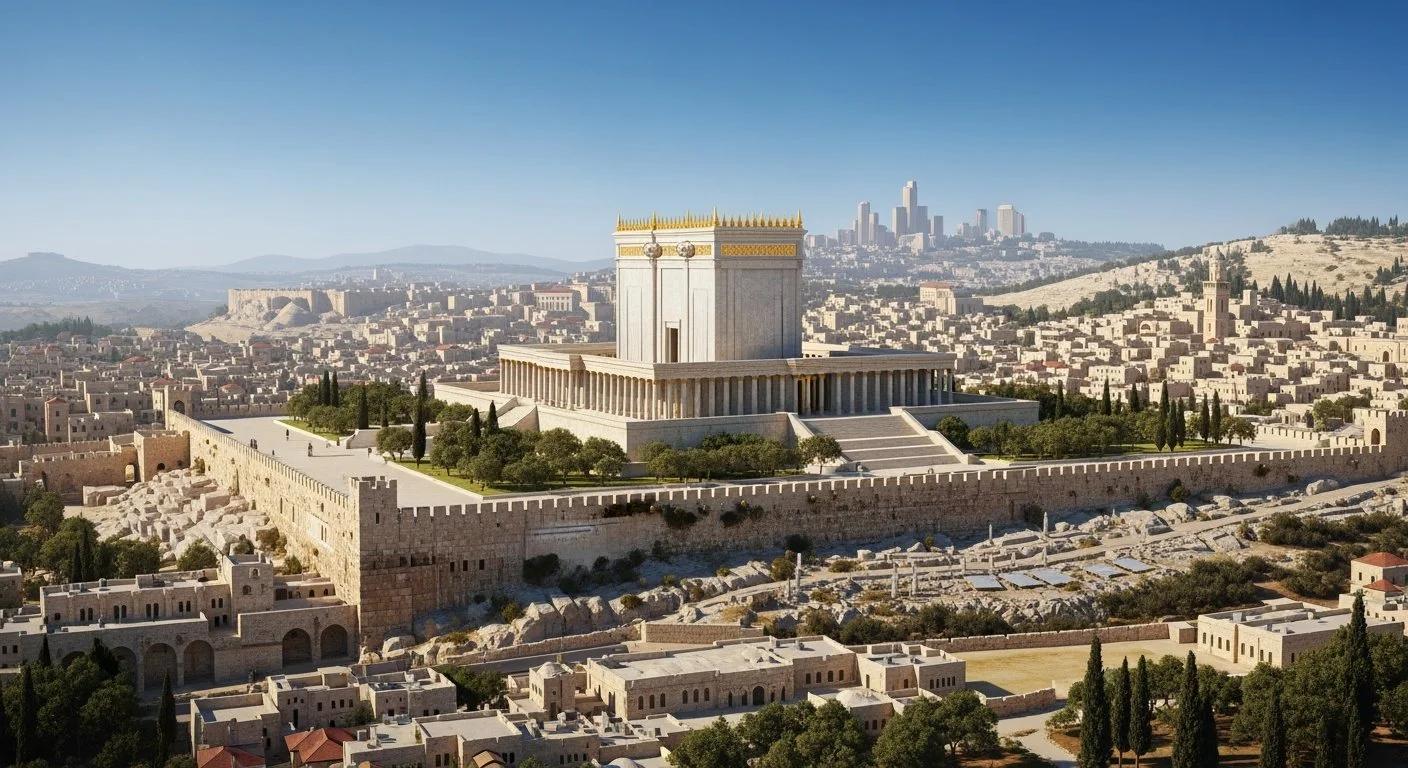
In Psalm 2, we read: “Ask of Me, and I will give You The nations for Your inheritance, And the ends of the earth for Your possession” (Psalm 2:8). It should be clear that the Father is speaking to the Son, for it says in the preceding verse, “Yet I have set My King On My holy hill of Zion. I will declare the decree: The Lord has said to Me, You are My Son, Today I have begotten You” (Psalm 2:6-7, NKJV).[i] Jesus, the Son of God, has been set upon the hill of Zion, which represents God’s Kingdom, and will physically establish His Kingdom from Mount Zion, in Jerusalem. He will take the nations for His inheritance and the ends of the earth for His possession.

In the Old Testament, we find that God repeatedly affirms He has chosen Israel (also called Jacob) as His heritage or inheritance. In the following verses we read:
“I will also gather all nations, And bring them down to the Valley of Jehoshaphat; And I will enter into judgment with them there On account of My people, My heritage Israel, Whom they have scattered among the nations; They have also divided up My land” (Joel 3:2).
“Shepherd Your people with Your staff, The flock of Your heritage” (Micah 7:4).
“From following the ewes that had young He brought him, To shepherd Jacob His people, And Israel His inheritance” (Psalm 78:71).
“O God, the nations have come into Your inheritance; Your holy temple they have defiled; They have laid Jerusalem in heaps” (Psalm 79:1).
“For the Lord’s portion is His people; Jacob is the place of His inheritance” (Deuteronomy 32:9).
Israel is continually referred to in Scripture as God’s people, His heritage, His inheritance, and His flock. So, these verses raise some intriguing questions: if Jesus is to receive the nations as His inheritance according to Psalm 2, where does Israel fit into this picture? Has God substituted Israel for the nations, or somehow dissolved Israel’s identity altogether? And since we find that the church is Christ’s possession and His flock, how is the church part of Israel’s inheritance promises, and does Jesus have a new flock, called the church, that replaces Israel?
To answer these questions, we must distinguish between Israel as God’s chosen inheritance and the larger inheritance of the nations promised to Christ. Scripture brings these two inheritances together, not by abolishing Israel’s identity, but by showing how God gathers one redeemed people from Israel and the nations through faith in Christ.
Israel’s Calling and Inheritance
To understand how Israel relates to Christ’s inheritance of the nations, we must first examine Israel’s original calling. Deuteronomy 32 provides an important starting point because it places Israel and the nations within the same divine ordering of inheritance. This verse is also intriguing, because preceding it, the Lord says: “When the Most High divided their inheritance to the nations, When He separated the sons of Adam, He set the boundaries of the peoples According to the number of the children of Israel” (Deuteronomy 32:8). This verse establishes a distinct relationship between the number of the children of Israel and the nations, although we are not told exactly how this relationship unfolds. Only that there is a correlation.
Also, let me emphasize that the verse does not say that Jacob is His inheritance. It says it is the place of His inheritance. In Hebrew, the word for place is chevel (חֶבֶל), which means a rope, cord, or line. But it can also mean an assigned region, district, or inheritance, as in a measured lot of land. So, it is clear that God is not exclusively choosing the Jewish people as His inheritance; He has specifically chosen a measured portion of land as the appointed place to establish His Kingdom. We know this land to be what God promised to Abraham, Isaac and Jacob, and the city He chose for His earthly throne is Jerusalem.
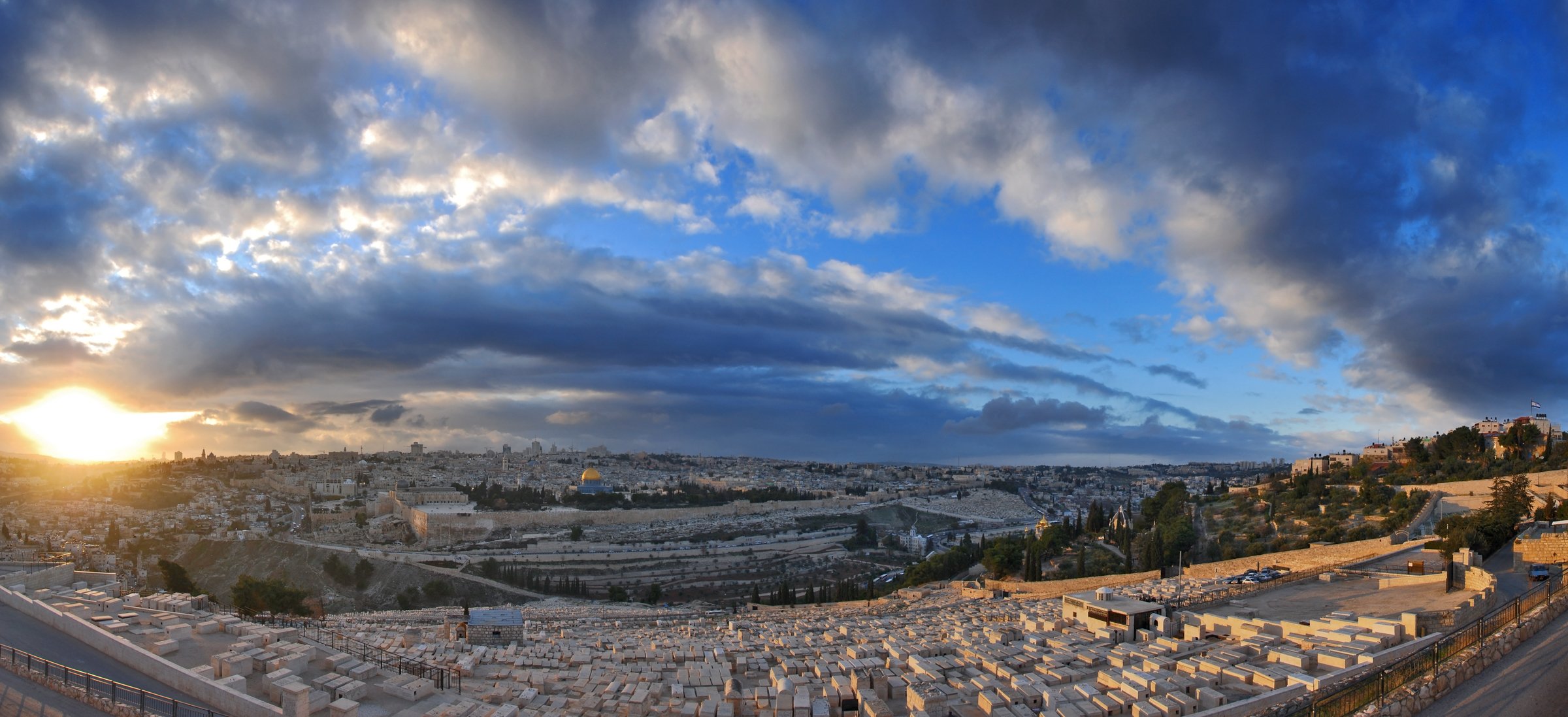
The picture evolves when we understand that Jesus is returning to the Mount of Olives in Jerusalem. And from this allotted portion of land that was promised to the descendants of Abraham, Jesus is going to establish the boundaries of all the nations according to the number of the children of Israel. In other words, God has chosen Israel uniquely for Himself as an inheritance, and chosen them for a unique purpose, namely to establish His Kingdom from their allotted portion of land, over which He will gather all the nations to Himself as an eternal inheritance.
The translation here is from the Masoretic text. However, if we read the Septuagint LXX, it says, “When the Most High divided the nations, when he separated the sons of Adam, he set the bounds of the nations according to the number of the angels of God.” The Dead Sea Scrolls and Septuagint preserve an ancient textual tradition that reads “sons of God (b’nei Elohim),” rather than the traditional Hebrew Masoretic Text, “sons of Israel (b’nei Yisrael).” However, this distinction does not alter the text’s overarching meaning once we understand that the promises made to the children of Israel were that they would become sons of God.
Whether the textual tradition reads “sons of Israel” or “sons of God,” Deuteronomy 32 directs our attention toward a larger purpose: God’s choice of Israel is connected to His purpose for the nations. But this raises an even deeper question: Who ultimately qualifies as a son of God and, therefore, an heir of the promise? Let us explore this further.
The Promise Received by Faith
Israel’s inheritance cannot be understood merely in terms of land, ethnicity, or national calling. At the heart of the promise is something greater: the calling to become children of God. Jesus alludes to this when He cited Psalm 82 to the Jewish people as they were trying to kill Him, “Is it not written in your law, ‘I said, You are gods (Elohim)’” (John 10:34). The Psalm expounds on this, saying, “All of you are children of the Most High.” So now we have a better understanding of the fulfillment of the ultimate promise given to Israel. The Jewish people were called to be far more than God’s inheritance and land possession. They were destined to become His sons and daughters, children of the Most High God.
Jesus affirmed this, saying, “For in the resurrection they neither marry nor are given in marriage, but are like angels of God in heaven” (Matthew 22:30). Some scholars retain a distinction between the angelic realm and humanity. But here Jesus is pointing to a transcendent event, the resurrection, where the believer is transformed from this perishable and corruptible body to become like angels in heaven.[ii]
Scripture therefore presents a progression in the promise of sonship. Israel was first called God’s son corporately: “Israel is My son, My firstborn.”[iii] Yet the fullness of this sonship is realized individually in those who receive Christ, for John says that those who believe in His name are given “the right to become children of God.”[iv] This promise of adoption ultimately looks forward to the resurrection, when the children of God will receive their glorified inheritance. Jesus describes this transformed state by saying that in the resurrection they “are like angels of God in heaven.”[v] Thus, being called God’s son, becoming His children through faith, and being transformed in the resurrection are related aspects of the same unfolding promise: what was declared concerning Israel finds its ultimate realization in those who belong to Christ and are raised to eternal life.
But Scripture places an important condition upon this promised sonship. John tells us: “But as many as received Him, to them He gave the right to become children of God, to those who believe in His name: who were born, not of blood, nor of the will of the flesh, nor of the will of man, but of God” (John 1:12-13). And Paul expounds on this, saying, “Those who are the children of the flesh, these are not the children of God; but the children of the promise are counted as the seed” (Romans 9:8). In other words, being born into Israel does not guarantee that one will be a recipient of the promise. It requires faith in Christ as the seed of the promise. He is the anointed one of Israel, the Messiah. Those who reject Him reject their inheritance in Him.
God in the Old Testament took Israel as His special possession and inheritance, and He promised that they would become sons of God, even calling them His sons long before the appointed time of their inheritance. God is outside of time. We read in Exodus, “Thus says the Lord: Israel is My son, My firstborn” (Exodus 4:22). However, receiving the promise was conditional. Conditional at first through faithful obedience to the Law of Moses, and when Christ came, through faithful obedience to follow the Son of God. Faith was always the key to God’s Kingdom, “Without faith it is impossible to please Him, for he who comes to God must believe that He is, and that He is a rewarder of those who diligently seek Him” (Hebrews 11:6).
The children of Israel were promised to become the sons of God, and this is the most tragic rejection of their inheritance. It is more than not entering God’s Kingdom; they are losing their inheritance as God’s sons. John specifically says, “As many as received Him,” implying that any person, even those of the Gentiles, who receives Christ, is promised the resurrection and the destiny to become a son or daughter of God Most High. Paul says, “For as many as are led by the Spirit of God, these are sons of God” (Romans 8:14).
The inheritance, therefore, is received by faith rather than natural descent alone. Israel was called as God’s son, but the promised sonship reaches its fulfillment in those who receive Christ. It creates the question Paul confronts directly: What happens when some of Israel rejects the promise while Gentiles receive it by faith?
Israel’s Stumbling and the Calling of the Nations
If the promise is received by faith, Israel’s unbelief creates a difficult but unavoidable question: does the rejection of Messiah by some Israelites nullify Israel’s calling, or does God accomplish His purposes another way?
Paraphrasing from Hosea, and speaking to the Gentiles, Paul says, “And it shall come to pass in the place where it was said to them, ‘You are not My people,’ There they shall be called sons of the living God” (Romans 9:26). In other words, the promise for Israel was now going to include the Gentiles, grafting them in place of dead branches that God has cut away from His cultivated olive Tree. Jesus Himself said this to the Jewish leaders who rejected Him, “The kingdom of God will be taken from you and given to a nation bearing the fruits of it” (Matthew 21:43). To be clear, I am not espousing replacement theology. But I am highlighting what the Scriptures warn: “Therefore consider the goodness and severity of God: on those who fell, severity; but toward you, goodness, if you continue in His goodness. Otherwise you also will be cut off” (Romans 11:22).
For those who reject God’s promise, He will cut them out of His cultivated olive tree, and graft in those called of the Gentiles to become His sons and daughters. Again, this is not a replacement of Israel; it is a replacement of dead branches, those that died without faith, and a grafting in of faithful wild (Gentile) branches to become one flock and one people in Christ. We have answered the first question: Israel is still the place of God’s inheritance, and He has opened the door of salvation to the Gentiles, those who by faith have received Christ. They are now also God’s inheritance. But this creates a new tension: do these grafted Gentile branches now become Israelites, or is God merely redeeming the nations through Israel?
One Covenant, One People, One Olive Tree
We have established that Gentile believers become partakers of Israel’s covenant promises without replacing Israel. But what exactly does that make them? Do Gentiles become Israelites, do Jews and Gentiles constitute two covenant peoples, or does Scripture present another category altogether?
This question remains at the center of the controversy surrounding what is called Supersessionism (Replacement Theology). We do not find two covenant peoples of God in Scripture; we find one covenant people, namely Israel, and after Jesus came, we find the church. The New Covenant was made exclusively with the House of Israel and the House of Judah, and God later opened it to the Gentiles.[vi]
Some who espouse Covenant Theology argue that Israel’s covenantal promises are fulfilled in the church, also called Fulfillment Theology. But this theology has flaws, because God repeatedly says in His word that He will regather and restore the scattered descendants of Jacob. Instead, what I am presenting here is a middle ground between classical dispensationalism and covenant theology. Clearly, the church is not being scattered into exile with a promise of regathering. Therefore, the church cannot be the fulfillment of these promises, given that these promises were made exclusively to the natural descendants of Abraham. Also, Paul refers to Himself as an Israelite, so it is clear that he retained His natural identity.
So, if there is only one covenant people in the Old Testament called Israel, then some would presume that Gentiles brought into Israel’s covenant promises become Israelites. But this would require the Gentiles to obey the Abrahamic Covenant and receive the sign in the flesh—circumcision. However, this issue was clearly resolved by the Council of Jerusalem. Gentile believers do not become Israelites, nor are they required to follow the Law of Moses regarding circumcision and dietary laws. The Gentiles, however, do become partakers of Israel’s covenant promises. But now we have a new tension: being a partaker in Israel’s promises leads to what appears to be a differentiation within the body of Christ, a present-day argument in many churches and Messianic congregations. Yet Paul says, “We, being many, are one body in Christ, and individually members of one another” (Romans 12:5). One body implies no division.
We therefore encounter two boundaries that must both be maintained: Gentiles do not need to become Jews in order to inherit Israel’s promises, and Jews do not need to give up their ethnic identity and become Gentile Christians. And yet, Jewish and Gentile believers do not constitute two separate bodies before God. The answer must preserve both distinction and unity. Jesus gives us the language for doing precisely that: one Shepherd and one flock.
One Shepherd and One Flock
Jesus Himself provides the framework for resolving the tension between Israel’s particular calling and God’s purpose for the nations. His mission begins with Israel, but His flock ultimately encompasses far more than Israel alone.
Still, some scholars argue for two covenant people groups, Jews and Gentiles, but this view has theological flaws. Jesus is the mediator of the New Covenant, and there is only “one” covenant for Jew and Gentile. More significantly, Jesus said, “I was not sent except to the lost sheep of the house of Israel” (Matthew 15:24). This verse might lead some to believe that Jesus did not also come for the Gentiles, and yet, John declares, “Behold! The Lamb of God who takes away the sin of the world!” (John 1:29).
There is only one way to resolve this seeming paradox. God must have other nations that were to become His inheritance. Jesus said, “Other sheep I have which are not of this fold; them also I must bring, and they will hear My voice; and there will be one flock and one shepherd” (John 10:16). The question is whether Jesus receives these nations through Israel or apart from her. For this reason, the Lord says in Deuteronomy, “Jacob is the place of His inheritance” (Deuteronomy 32:9), emphasis on the word “place.” In other words, Christ will receive His inheritance of the nations through the allotment apportioned to Israel, not apart from her.
We are given a beautiful picture of God’s Kingdom when John sees the holy city, the New Jerusalem, coming down from God out of heaven, prepared as a bride adorned for her husband. The city has twelve gates named after the twelve tribes of Israel, and its foundation is the twelve apostles of the Lamb. And it says, “The nations of those who are saved shall walk in its light, and the kings of the earth bring their glory and honor into it. Its gates shall not be shut at all by day (there shall be no night there). And they shall bring the glory and the honor of the nations into it” (Revelation 21:24-26). The nations and their kings enter through gates named after the twelve tribes of Israel. Is this not a fulfillment of Ezekiel’s prophetic words, where he says, “It shall be that in whatever tribe the stranger dwells, there you shall give him his inheritance,” says the Lord God” (Ezekiel 47:23).
Israel was given a promise, fulfilled in the Messiah, that they would become sons of God, but God has also called His elect from amongst the nations, that they also may become sons of God. Hence, Paul says, “Even us whom He called, not of the Jews only, but also of the Gentiles” (Romans 9:24). And yet, one body and one flock comprised of two groups, Jews and Gentiles, does not mean two separate covenants, because there is only one King, Jesus, Yeshua. He is the mediator of the one New Covenant. However, one body and one flock does not mean we do not retain our unique qualities. We do. In Revelation, we read, “You are worthy to take the scroll, And to open its seals; For You were slain, And have redeemed us to God by Your blood Out of every tribe and tongue and people and nation, And have made us kings and priests to our God; And we shall reign on the earth” (Revelation 5:9-10).
This clarity should remove the tension between Jew and Gentile. We are one in Christ, equal before God, but we do not need to be the same. And Christ’s inheritance is more than Israel, because it is through Israel’s allotted portion that the nations are grafted into His Kingdom. Hence, Paul says to the Gentiles, “You, being a wild olive tree, were grafted in among them, and with them became a partaker of the root and fatness of the olive tree” (Romans 11:17). Amongst them implies amongst the natural branches of Israel.
The nations are joined to Israel to become one global family of God’s children of every tongue and tribe. Christ’s inheritance is every nation to the ends of the earth. Israel retains a unique identity within His Kingdom, but the nations are joined to Israel, fulfilling the promise to Abraham that he would become the father of many nations. And his descendants would be as numerous as the stars in heaven and the sands of the sea.[vii] But if Gentile believers neither replace Israel nor become ethnic Israelites, what precisely is their relationship to Israel and her inheritance? Paul calls the answer a mystery.
The Mystery Revealed
We can now state the mystery more precisely. God’s purpose was not merely to preserve Israel on one side and save Gentiles on the other, but to bring believing Jews and Gentiles together in Christ as joint heirs of His Kingdom—without erasing the distinctions from which they were called.
In Scripture, the church is not called Israel. She is called the ecclesia, which translates as “the assembly.” The church is the assembly of all of God’s children redeemed by the blood of the Lamb from every nation. Israel was promised to become sons of God, and with this, the nations were promised as an inheritance to Israel. It says, ”For you shall expand to the right and to the left, And your descendants will inherit the nations, And make the desolate cities inhabited” (Isaiah 54:3). The promise is that all the sons of God will inherit the nations through Israel. In this regard, the church is both the called-out ones, the elect of God, but also the spiritual descendants of Abraham that receive the promise of adoption and the inheritance of the nations in Christ.[viii] We are those whom the Lord has elected to rule and reign with Jesus over the nations.
And this is one of the great mysteries that Paul reveals, that the Gentiles who were not part of God’s covenant were brought near to enter into His covenant in the place of those who were cut off due to their unbelief. Hence Paul says, “Through their fall, to provoke them to jealousy, salvation has come to the Gentiles” (Romans 11:11). Paul is not saying that the church replaces Israel. He is saying that due to their unbelief, God has severed dead branches from His cultivated Olive tree, and in their place He has given over His inheritance to the Gentiles who have received Christ by their simple faith. As the Lord declared: “I was sought by those who did not ask for Me; I was found by those who did not seek Me. I said, ‘Here I am, here I am, To a nation that was not called by My name. I have stretched out My hands all day long to a rebellious people, Who walk in a way that is not good, According to their own thought” (Isaiah 65:1-2). Paul paraphrases Isaiah 44, saying, “What then? Israel has not obtained what it seeks; but the elect have obtained it, and the rest were blinded… But through their fall, to provoke them to jealousy, salvation has come to the Gentiles” (Romans 11:7, 11).
Another mystery is how the Gentiles become part of Israel, spiritually, but do not lose their identity of the nations where they were called from. The analogy of the cultivated Olive tree that Paul describes in Romans 11 is both a picture of Israel, represented by a green Olive tree in Scripture, and of God’s Kingdom, which the disciples understood as belonging to Israel.[ix] As they asked Jesus, “Lord, will You at this time restore the kingdom to Israel?” (Acts 1:6).
The mystery, then, is not that Gentiles become ethnic Israel, nor that the church replaces Israel. Rather, Gentiles who were once outside the covenant are brought near through Christ and made fellow heirs with Israel of the promises, while God remains faithful to His purposes concerning Israel.[x]
Israel’s Future Hope
One final detail: most of Israel today is still largely rejecting their inheritance in Christ. However, none of this means that God has finished with natural Israel. If the inclusion of the Gentiles does not constitute Israel’s replacement, then Scripture should also testify to a future hope for the descendants of Jacob, and it does. God will fulfill His promise to save a remnant at the end of this age. God issued a certificate of divorce to Israel’s ten northern tribes, later scattering them into captivity. And yet, the Lord says:
“Where is the certificate of your mother’s divorce, Whom I have put away? Or which of My creditors is it to whom I have sold you? For your iniquities you have sold yourselves, And for your transgressions your mother has been put away” (Isaiah 50:1); “Yet the number of the children of Israel Shall be as the sand of the sea, Which cannot be measured or numbered. And it shall come to pass In the place where it was said to them, ‘You are not My people,’ There it shall be said to them, ‘You are sons of the living God’” (Hosea 1:10).
God’s promises to Israel are unbreakable and irrevocable. Still, the only assurance of becoming a child of God and entering His Kingdom is through His Son, Jesus (Yeshua). There is no other way to enter. Paul warns that many of his brethren are perishing without Christ, and implores the Gentiles to share the Gospel and provoke as many to jealousy as possible.
We can therefore return to the questions with which we began. Christ’s inheritance is the nations, including the nation of Israel; Israel remains uniquely chosen within God’s redemptive purposes; and believing Gentiles are brought into the blessings of Israel’s covenant promises through Christ without becoming ethnic Israelites or displacing Israel. Jew and Gentile remain distinguishable, yet in Christ they belong to one body, one flock, and one Kingdom under one Shepherd. Let us remain strongly planted in our faith, Jew and Gentile, the elect of God called together as One New Man in Christ, for we know the great inheritance that we have in the Lord, to become His sons and daughters and to enter His Kingdom forever.
[i] All Scripture quotations are taken from the New King James Bible (NKJV) unless otherwise noted, Thomas Nelson Inc., 1982.
[ii] Job 1:6. Genesis 6:2, 4. Revelation 19:10.
[iii] Exodus 4:22.
[iv] John 1:12.
[v] Matthew 22:30.
[vi] Jeremiah 31:31.
[vii] Genesis 15:5, 17:4-5, 22:17, 26:4.
[viii] Romans 4:16.
[ix] Jeremiah 11:16.
[x] Ephesians 2:11–22, 3:4–6.